
Home
System Integrator & Ecosystem
Solution
System Integrator & Ecosystem
Connect data, applications, infrastructure, and processes into one working environment.
Data Integration
Application Integration
Infrastructure Integration
Explore ScopeTalk to Our TeamDEFINITION & SCOPE
Clear scope before the work begins.
What the service includes and what it deliberately does not so technical and procurement teams can evaluate the boundary clearly.
System Integrator & Ecosystem
Bangunindo integrates technology across systems that were not originally designed to work together. The work can span data, applications, infrastructure, enterprise processes, and product implementation, with governance defined around interfaces, ownership, testing, cutover, and operational handover.
Data Integration
Connect data sources and target platforms, standardize exchange flows, and support reliable movement of data across the agreed architecture.
Application Integration
Integrate applications and services through approved interfaces, APIs, or enterprise integration patterns so systems can exchange data and trigger business flows.
Infrastructure Integration
Align network, server, cloud, monitoring, and platform components required for the integrated solution to operate as one environment.
Process Integration & EAI
Connect business processes across applications and enterprise systems, including enterprise application integration where required.
Product & Platform Implementation
Implement and integrate approved products or platforms as part of the target architecture, including configuration, integration, testing, and handover.
Technology Ecosystem Coordination
Coordinate the roles of approved technology partners or principals when their product, platform, or specialist capability is part of the solution.
How the service is delivered.
The operating model changes by pillar—from SLA and escalation for Managed Service to team rhythm, handover, integration patterns, and governance.
Technology the team genuinely works with.
A practical technology stack for technical evaluators not a logo wall of tools the team cannot substantiate.
- BLIV Platform: data integration, data engineering, analytics, and operational data platform capabilities.
- Zabbix: infrastructure and service monitoring within integrated operational environments.
- Semeru NET: network monitoring and management for integrated infrastructure environments.
- Semeru ERP: integrated enterprise operations where ERP modules or enterprise workflows are part of the target architecture.
- Integration Architecture & Interfaces: data integration, application integration, infrastructure integration, process integration, and EAI patterns used according to the approved solution scope.
Make the service tangible.
Show the artefacts clients actually receive: reports, reviews, dashboards, recommendations, and other operational outputs.
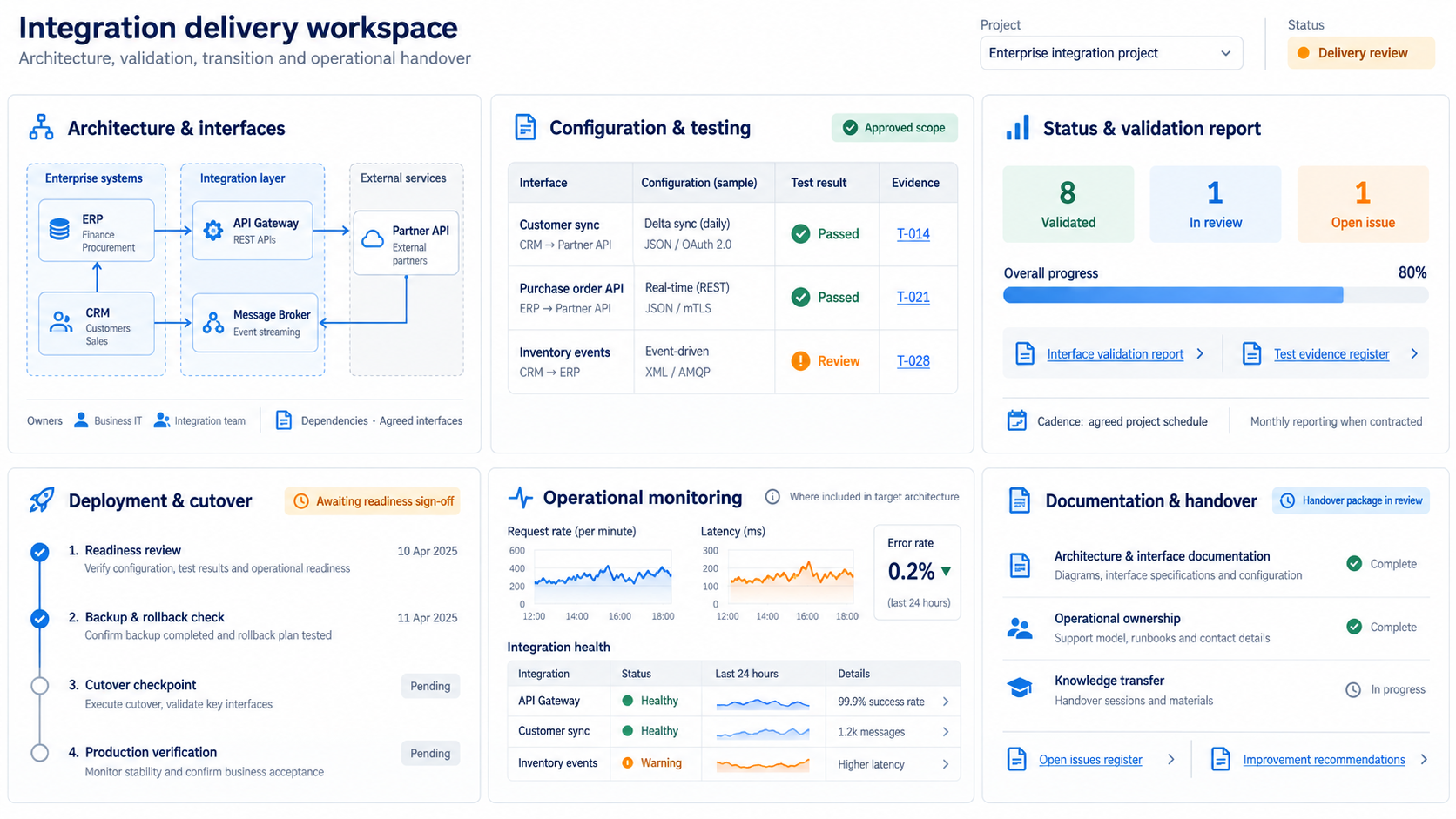
- Integration architecture & interface map covering system boundaries, ownership, dependencies, and agreed interfaces.
- Configured & tested integrations within the approved scope, supported by interface/data validation and test evidence.
- Integration status & validation report at the agreed project cadence, including monthly reporting when it is part of the contract.
- Deployment & cutover plan with transition checkpoints and production-readiness actions.
- Operational dashboard / monitoring view where observability is included in the target architecture.
- Documentation, handover & improvement recommendations covering architecture, interfaces, operational ownership, knowledge transfer, open issues, and next-step improvements.
See the service in a real context.
Related anonymised use cases connect the service line to outcomes without exposing project names or contract values.